Good Intentions Poor Outcomes
What Ghana's Post-COVID Transformation Programme taught me about how quickly big cross-cutting Government initiatives can fail

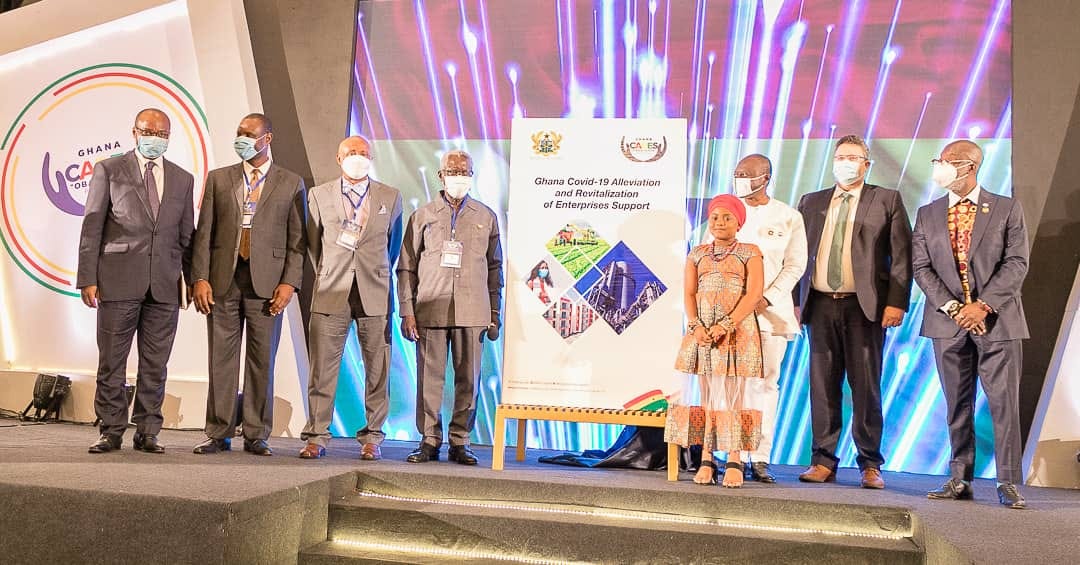
Recent conversations with Oxford University’s Economic Policy Network forced me to revisit a period of my working life that taught me a slow-motion lesson in humility. One experience in particular - the Ghana CARES programme.
Back in 2020, the CARES programme was launched to much fanfare and positioned as “the transformative economic policy to properly reposition Ghana beyond the COVID pandemic”. The intentions were good. This was supposed to be the policy that “remade the country in a way that lasts”. 6 years after the launch, I reflect back on some harsh lessons learned.
First, is that, some governments, Ghana’s in particular, are unusually good at launching ambitious programmes but not so good at running them. I got to see this up close with CARES, and I'll mostly use this post to talk about how it came together, what went wrong, and what I think it means for African governments still running versions of the same playbook.
Back to 2020
To understand Ghana CARES, you have to go back to the first half of 2020, because the environment that produced it shaped everything that followed.
The early months of the pandemic were genuinely chaotic in a way that is hard to convey if you were not inside government at the time. Revenue was collapsing. Expenditure was spiking. We were running a deficit that blew past anything originally programmed. The Bank of Ghana extended a GH¢10 billion (USD 1 billion) facility to the government.
As I wrote in my last Inside the Room piece, everyone was winging it to some degree. Keep in mind, this was during “Covid Version 1”, the early days when it felt like getting the virus was a death sentence. Before Omicron, before vaccines, before we understood transmission properly.
The extent of support doled out was unprecedented, especially for an economy like ours. Free water for households, hot meals delivered to vulnerable communities, free fumigation for markets and schools, electricity subsidies, relief packages for frontline health workers, emergency credit for small businesses and so on. There’s so much more I can’t remember, but essentially, things that were politically unthinkable six months earlier become policy within a matter of weeks.
My boss, the Minister, was at his desk throughout. His reluctance to leave his office for much of those early days reminded me of the captain going down with the ship in Titanic. The workload was insane and by the end of the year, he ended up hospitalised with Covid and needing surgery for serious liver damage.
Throughout that period, I was regarded as “an essential worker” and had to be in the office with him daily. I still don’t know how I made it through those days without getting Covid once. Lucky me i guess.
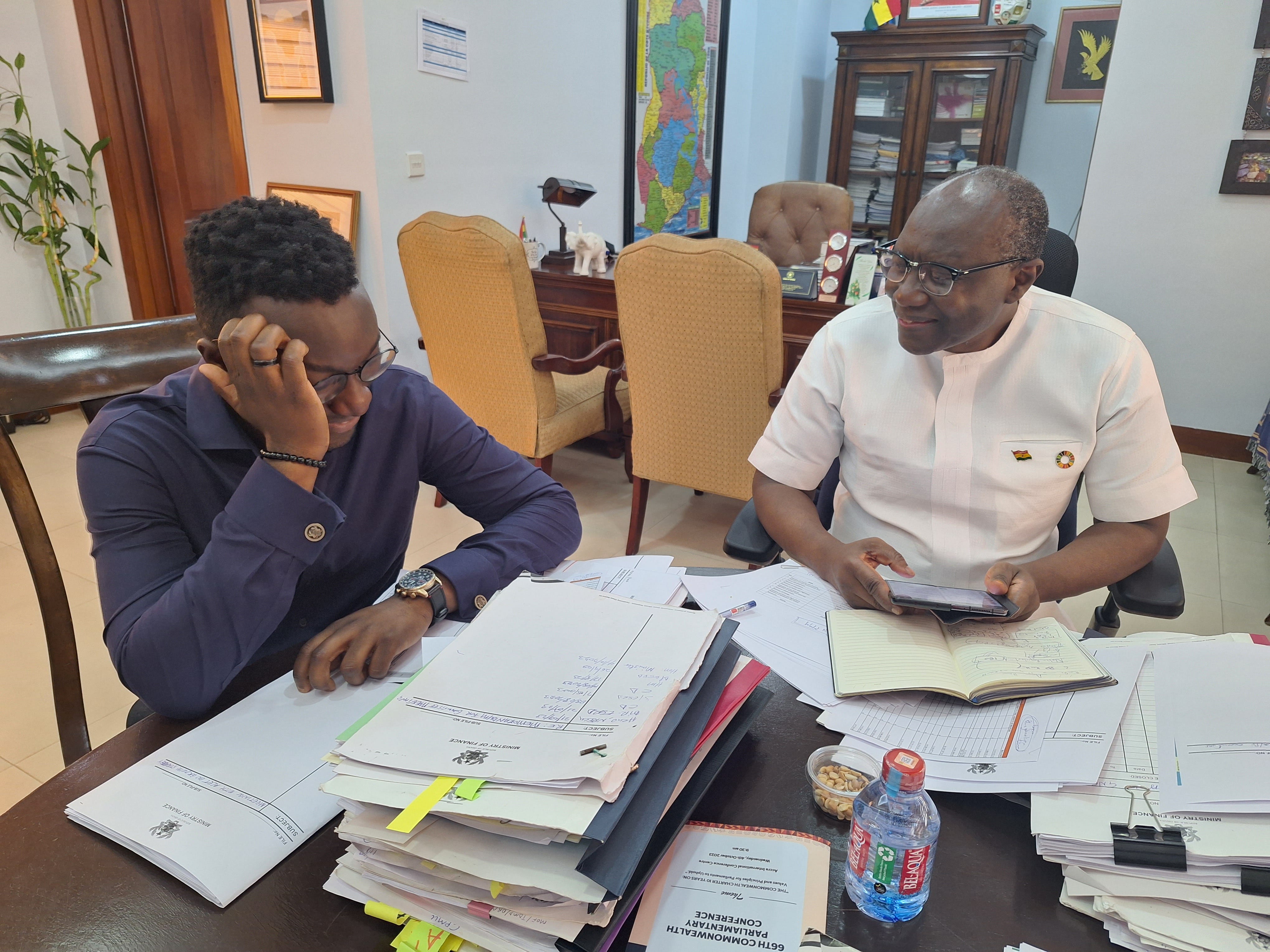
By July 2020, the firefighting had stabilised enough for a different question to emerge. My boss argued that the crisis had created an opportunity, and he was right! Things couldnt go back to the way they were, and he kept insisting to me, “We can use this moment to actually change Ghana’s economic structure”. For the first time in a while, I was excited to go to work, even though nothing made sense in the world around me; I finally felt we were going to use all of the craziness to do some serious reform.
The Blueprint
I was asked to be part of a small group responsible for putting together the recovery plan. The intellectual leadership came from Dr Yaw Ansu, a brilliant man who spent most of his career with the World Bank and was Stanford-trained in economics. More proof, if any were needed, that there is no shortage of smart people working inside global south governments.
The consultations were extensive both within and outside the Finance ministry. The thing I learned about the civil service is that when you bring them into a genuine process, they can map a problem with remarkable precision. The challenges were well known i.e import dependence, youth unemployment, a manufacturing sector operating far below potential, etc. Honestly, the problem in Ghana, and I suspect across much of Africa, has never been identifying the right things to do. It has been having the discipline to actually fix them.
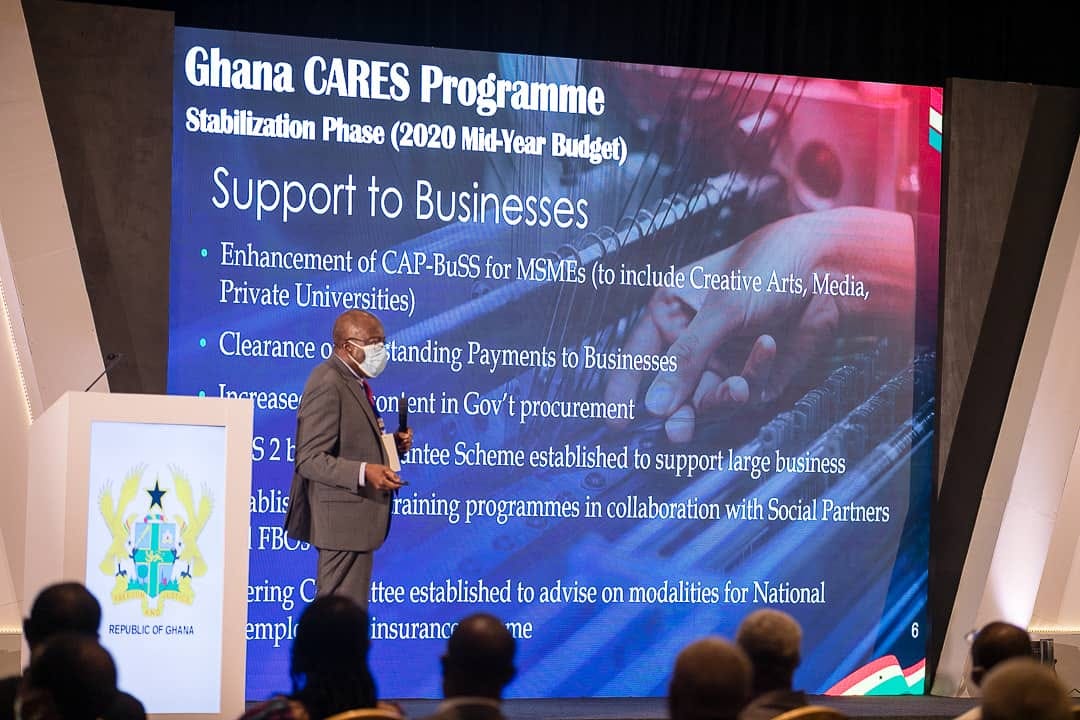
We ended up designing a two-phase programme. Phase one was stabilisation: immediate relief, protecting businesses, and food security. Phase two was the ambitious part: developing a light manufacturing industry, agro-processing, accelerating digitisation, positioning Ghana as a regional hub, etc. The document is available online for those who want more details.
The whole thing cost about GH¢100 billion ( USD 10 billion) over three years, with 70% expected from the private sector. In the initial designs, an implementation monitoring council chaired by the Finance Minister was instituted to meet monthly. Results Clusters. Cluster Champions. Dashboards. Accountability with consequences for failure.
Cross-ministerial coordination was the graveyard of Ghanaian policy, and we knew it. So we tried designing an architecture specifically designed to overcome it: compacts, cluster champions, and monthly oversight. We identified the disease, prescribed the medicine, wrote it all up in a beautifully formatted document for it to be launched and become actual policy.
What we failed to do was see the implementation through properly.
The Glitz and Then the Silence
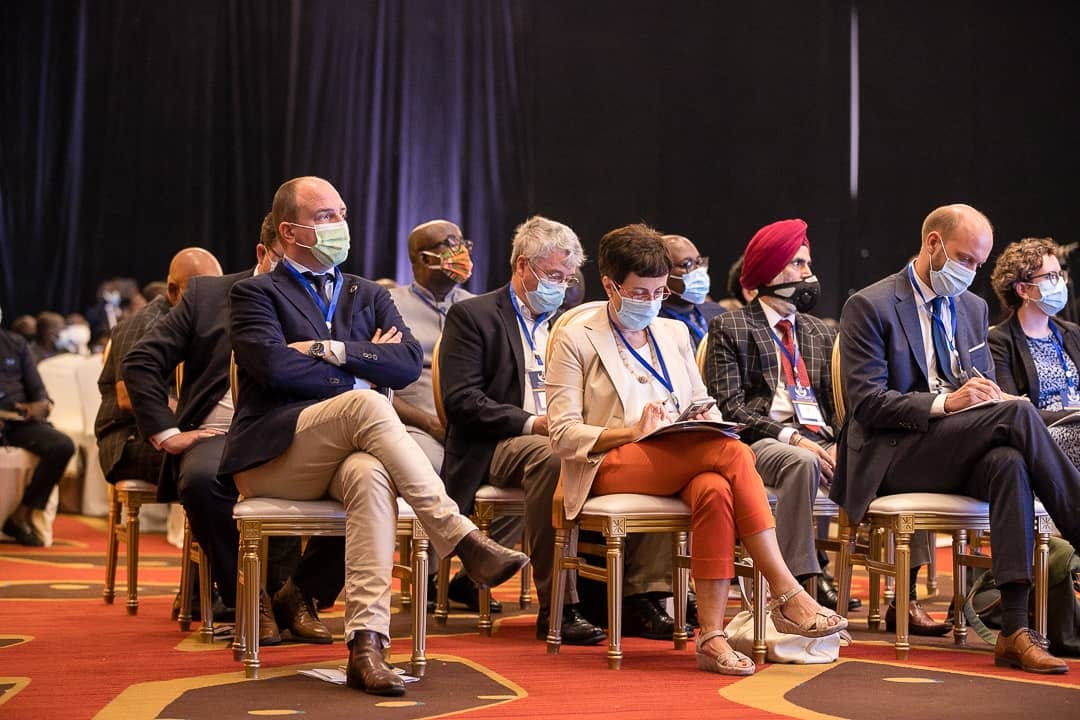
The launch in late 2020 was everything these things usually are. Everyone who mattered was there. Compacts were signed. Ministers were aligned. We eventually brought in McKinsey to support the delivery unit, and I think the Tony Blair Institute as well, though my memory is getting hazy. Good analytical support. Lots of excellent presentations.
Then the silence came.
Not immediately. There was a period of activity. Meetings, updates, progress reports. But when you looked closely, the activity was mostly within the Ministry of Finance. The line ministries would not resist the programme outright but would smile, sign compacts, and gradually go back to their normal business. Far from hostile, they simply had no rational incentive to prioritise CARES over their own institutional agenda, and our big failing was that even with power over budgets, we never created a mechanism that actually changed that calculus. They went ahead to plan, execute, and, importantly, procure what they wanted, not what was “best for CARES” but what was aligned to their own agendas.
The Chief Director at the Finance Ministry did her best to maintain momentum, but CARES was running in one lane while the government's actual business was running in another. It became performative. The coordinating unit setup at the Finance Ministry had no real power to compel; we basically ended up being school hall monitors. Nobody answers to a hall monitor.
Even keeping the secretariat at Finance was, in retrospect, a mistake. It signalled that this was the Treasury’s project, not a whole-of-government priority. The ministers responsible for delivery did not feel a sense of ownership.
2022 and the End of the Road
I have written about what happened to Ghana’s economy in 2022 before, so I won’t dwell on it here. We had a lot happening on the macro side, and it consumed everything.
I would occasionally check in on CARES during this period, but only lightly; we were staring collapse in the face, no time to think about a structural transformation programme when we could barely afford to import fuel.
I eventually got my hands on the 2022 implementation report, and what it showed was how far the programme had drifted from its original ambitions. The industrialisation agenda, the manufacturing transformation, the PPP infrastructure pipeline: essentially, none of it had meaningfully moved. All the “progress” being made were just outputs from other Ministries regular work.
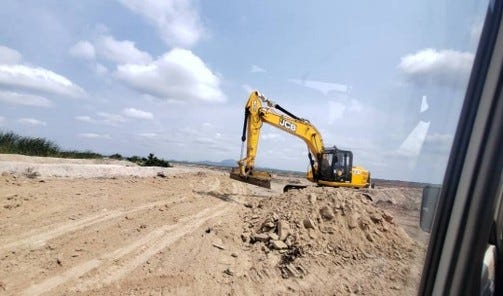
What remained active was a single agricultural enclave. Fancy English for a partially developed piece of farmland. Yep. What began as a GH¢100 billion economic transformation strategy, with ambitions to establish Ghana as a regional manufacturing hub and crowd in US$3 billion annually in FDI, had quietly become a rice farming project. That alone deserves serious examination.
There was also the private sector problem. We said 70% of CARES financing would come from the private sector. In practice, we never answered the most basic question a potential investor would ask: if someone had GH¢200 million (USD 20 million) to deploy into a CARES agro-processing project, where did they go? The secretariat? The Ministry of Agriculture? The President’s office? We had a pipeline of ambition and no pipeline of structured projects. Private capital does not chase government enthusiasm. It chases clear counterparties, legal frameworks, and structured transactions. We provided none of these.
What We Got Wrong
Let me try to distil the failure into learnable components.
The first problem was accountability without authority. We designed for coordination but funded it without enforcement. If you want government ministries to do something different, particularly African one’s, you need to be able to affect their budgets when they do not perform. We could not do that credibly.
The second problem was timeline delusion. Three years for a programme of this scope was never serious. Transformation programmes of this type, when they have worked anywhere in the world, have taken five to ten years of sustained government effort with institutional arrangements that survive changes in political leadership. We designed for one electoral cycle and hoped we could force things through.
The third problem was macro vulnerability, though I want to be precise here. The programme’s Phase 1 was designed to deal with the immediate fallout of Covid but what nobody designed for was what would happen to the transformation programme if Ghana’s broader fiscal position deteriorated badly.
There was no ring-fenced financing, no genuine private co-funding that would reduce dependence on public disbursements, no plan B if the macro environment turned hostile. When the 2022 crash arrived, CARES had no structural protection and simply hollowed out.
A Closing Thought
Ghana’s new government is running a national transformation policy that, from a distance, looks architecturally familiar: a cross-cutting economic programme, an authority figure coordinating across agencies, compacts, talk of export promotion and structural transformation, etc etc.
I hope it succeeds. But from experience, every time I see new compacts being signed, I know how the next scene tends to unfold. People go back to their lanes.
The lesson of CARES is not that transformation programmes are impossible. It is that they require something that governments, especially in the global south, consistently underinvest in: the hard, unglamorous institutional engineering that determines whether the thing you designed will actually function inside the government you actually have.
That means real authority to compel action, not just to convene it. It means a timeline that respects the pace of institutional change. It means answering the basic investor questions before you announce a financing target. And above all it means a collective discipline across government, a shared understanding that these programmes belong to everyone or they belong to no one.
Without that unity of purpose, you end up with something that looks like transformation on paper and feels like it in the launch hall but quietly dissolves the moment the room empties.
In the end CARES got cancelled by the next Government in it’s first budget statement. I understand. Smart people worked on CARES. Good intentions powered it. We articulated the vision clearly. We just never got the engine to start.
"In the end CARES got cancelled by the next Government in it’s first budget statement. I understand. Smart people worked on CARES. Good intentions powered it. We articulated the vision clearly. We just never got the engine to start" this got me thinking about the whole situation.